
Road Service
Terrain-aware road assessment, reactivation, and deactivation across British Columbia.
In forestry and resource operations, roads are both essential infrastructure and potential instability pathways.
A poorly aligned or improperly constructed road can introduce slope failure, concentrate drainage, accelerate erosion, and increase sediment delivery risk. A well-planned road supports safe access and long-term operational stability.
Third Rock Geoscience provides road-focused geoscience support grounded in terrain stability principles and real-world construction knowledge.
When Clients Call Us
Road-related assessment is typically required when:
Roads often determine what is operationally possible. Early assessment reduces surprises later.
Integration with Terrain Stability
Resource development requires access. Access to a specific area requires roads. Road construction is one of the critical contributing factors to terrain instability. Assessing the road locations prior to construction can be critical to your projects success. Where road alignments cross steep slopes for access, we integrate road evaluation with overall hazard classification and mitigation planning.
This ensures:
Consistency supports confident operational planning.
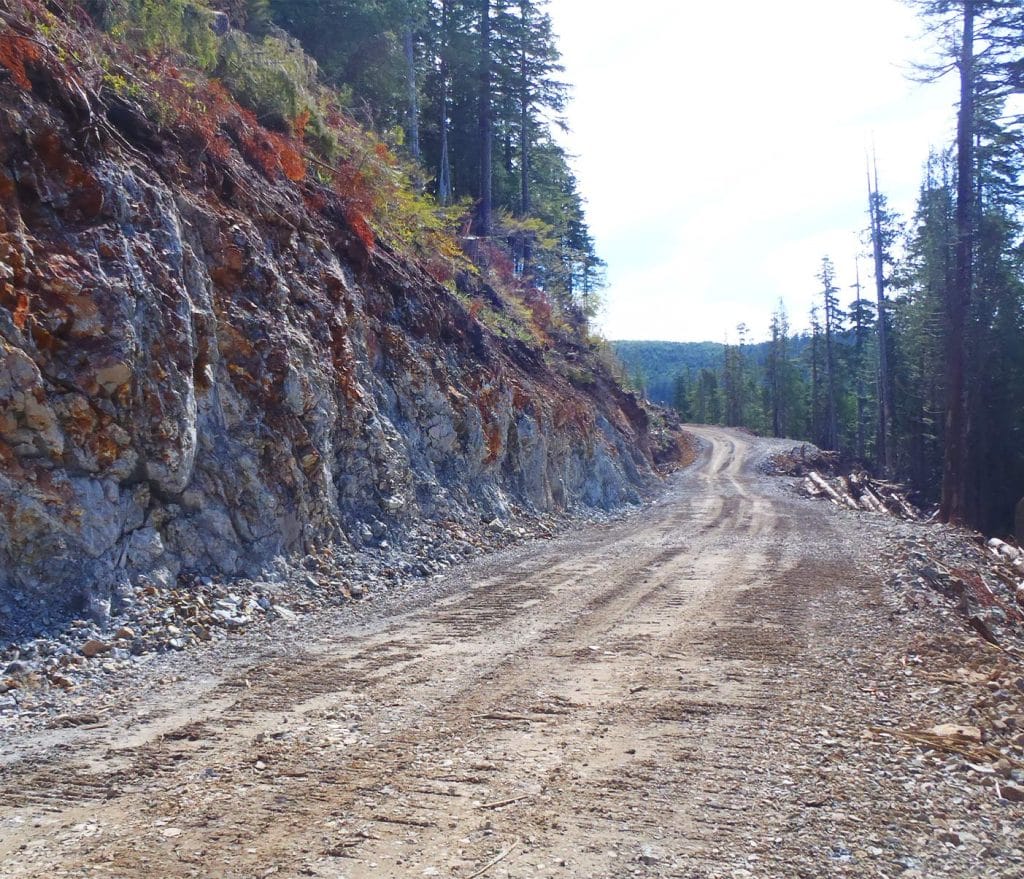
Reactivation Assessments
Not all roads are constructed equally. Reactivating an existing road requires more than clearing vegetation.
We evaluate:
Conditions may have changed since the road was last active. We assess the road in its present terrain context—not as originally designed.
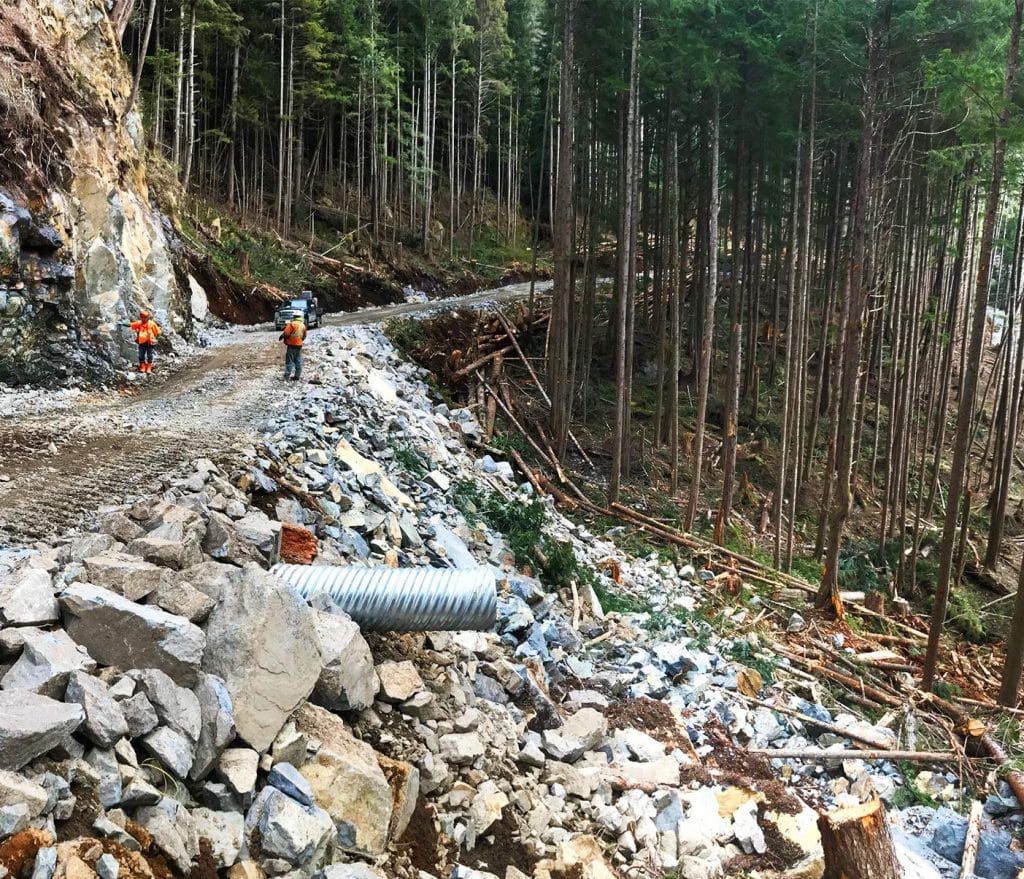
Drainage & Sediment Management
Water concentration is frequently the dominant driver of road-related instability.
We assess:
Sediment risk is not determined solely by distance to the downslope value. Energy gradients, terrain breaks, and hydrologic context matter.
Our evaluations integrate regulatory framework with field-based judgment.
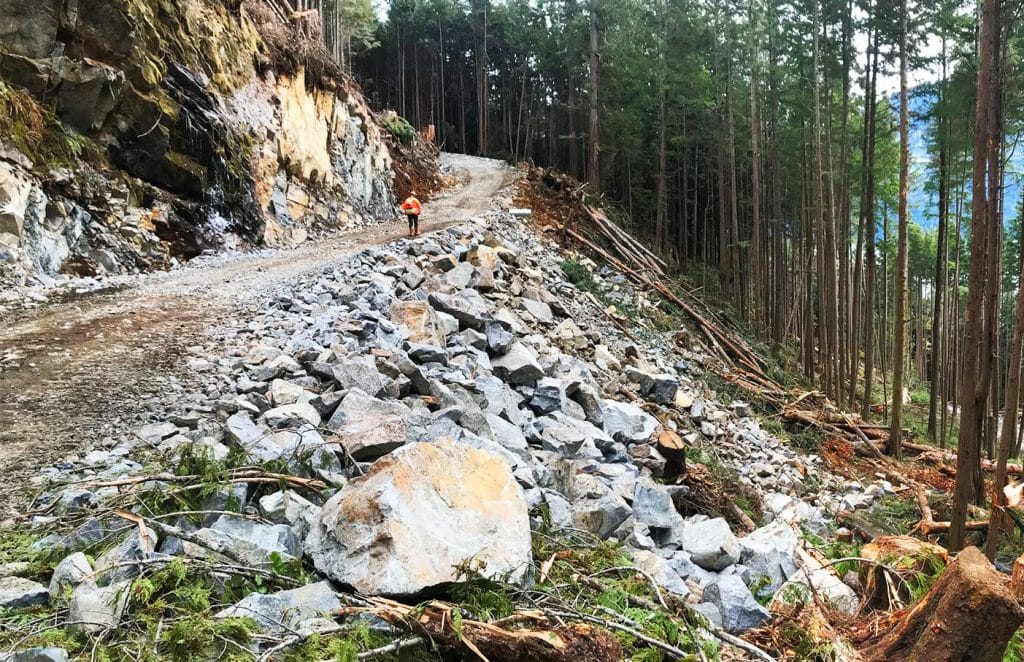
Road Deactivation Planning
Deactivation reduces long-term environmental liability when roads are no longer required.
Effective deactivation reduces residual risk without introducing new instability.
What Clients Receive
Road-related engagements may include:
Reports are structured, practical, and aligned with professional standards.
Consistency from Field to Final
Our field observations, summary recommendations, and final documentation align. Clients are not surprised by changing calls after internal review.
All deliverables are reviewed prior to release to ensure clarity and practicality.
Discuss Your Road Project
If you are planning road reactivation, new construction, upgrades, or deactivation in steep or sensitive terrain, early geoscience input reduces instability potential and supports practical decisions.
Contact Third Rock Geoscience to discuss your road alignment, terrain conditions, and timeline.
Terrain-aware decisions. Practical mitigation. Consistent reporting.
